
Aug 25, 2026 | 3:13 am
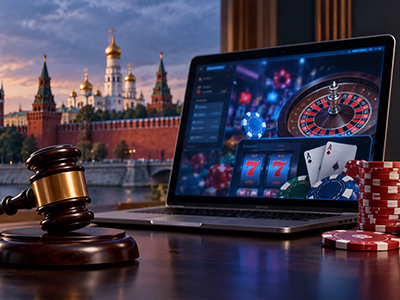
Russian authorities are examining potential approaches to the country’s online casino market as policymakers weigh the economic benefits of regulated gambling against concerns over consumer protection and gambling-related harm.
The discussion was highlighted by Deputy Finance Minister Ivan Chebeskov during the plenary session of the IV Russian Forum of Sports and Gambling Organizers, where he outlined the contribution of the regulated betting sector and identified the unlicensed online casino market as a key regulatory challenge.
According to Chebeskov, the government is currently considering different models for addressing online casino activity that remains outside the country’s legal gambling framework. No final policy decision has been announced, but officials are evaluating both stricter enforcement measures and the possibility of creating a regulated system similar to the one used for bookmakers.
Regulated Betting Market Generates Significant State Revenue
Chebeskov said Russia’s licensed betting industry now delivers substantial financial benefits through taxes and mandatory contributions that support sports development.
Officials estimate that the legal gambling sector contributes around RUB100 billion annually through a combination of tax receipts and targeted payments. The figure includes approximately RUB42 billion in earmarked contributions and roughly RUB50 billion in tax revenues collected at various levels of government.
The deputy minister attributed those results to efforts that moved betting activity into a regulated environment with transparent operating requirements.
"It's crucial for the state to find a balance between the obvious economic benefits and the social risks. A legal bookmaking industry means jobs, tax revenues, and targeted contributions to sports development. However, it's also essential to consider the risks of gambling addiction and ensure the protection of the most vulnerable groups of citizens. Therefore, the goal of regulation is not simply to ensure transparency in the industry, but to properly manage social risks: to implement strict controls, develop prevention and treatment for gambling addiction, and create mechanisms that allow citizens to limit their gambling on their own or with the help of their loved ones ," said Chebeskov.
Chebeskov said the performance of the regulated betting market demonstrates the impact of bringing gambling activity under formal oversight. He noted that transparent rules and legal supervision have helped move betting operations away from the shadow economy while creating a measurable source of public revenue.
Self-Exclusion Tool Records Early Adoption
Alongside discussions about industry regulation, authorities are continuing efforts aimed at reducing gambling-related harm.
Russia introduced a self-exclusion mechanism in September 2026 that allows individuals to voluntarily restrict their participation in gambling activities. According to Chebeskov, more than 60,000 people had already used the system by October 1.
The measure forms part of a broader strategy focused on consumer safeguards and responsible gambling controls. Officials have indicated that additional efforts to prevent and treat gambling addiction will remain an important component of future gambling policy.
The government views the self-exclusion program as one of several tools designed to give individuals greater control over gambling participation while helping protect vulnerable groups from potential harm.
Top Blackjack casinos

400%
up to
$ 4000
$ 4000
New customers only. T&C apply. 18+. This offer is not available for players residing in Ontario. New customers only. T&C apply. 19+. Min Deposit: $20. Max Bet: $5. Max Cashout: 10xDeposit. Cashable Bonus. Selected games only: See the website for a list of online slots.

150%
up to
$ 1500
$ 1500
New Customer Offer. T&C’s Apply. 18+. A minimum deposit of $20 is required to be eligible for the Welcome Bonuses.

250%
up to
$ 2500
$ 2500
New Customer Offer. T&C’s Apply. 18+. This offer is not available for players residing in Ontario & Alberta. New Customer Offer. T&C’s Apply. 19+. Play Responsibly. Welcome Pack is valid for slots, table games and specialties on the first 3 deposits of $25+ (Neosurf $10+) and up to $1000; WG x35, max cash out x20. Get 250% on the first deposit, 200% on the second, and 150% on the third one. Get extra 50% for crypto deposits.
Online Casino Market Under Review
While the licensed betting sector operates under established regulations, officials say the online casino market remains largely outside government oversight.
Chebeskov described the unlicensed online casino segment as one of the most pressing issues facing policymakers. According to officials, the market has grown to a size comparable to that of the regulated bookmaking industry, yet operators do not contribute taxes or sports-development funding through the same mechanisms as licensed businesses.
Authorities are now discussing how to address that gap. "Global experience shows that there are several approaches to resolving this issue. The first is prohibition and control through cash flows, website blocking, and so on. The second – as with the bookmaking industry – is legalization," he said, adding that the Ministry of Finance, along with relevant agencies and the industry, is currently discussing various options for an effective market regulation model.
The options under consideration include stronger enforcement through payment restrictions, monitoring of financial flows and expanded website blocking measures. Another possibility would involve establishing a legal framework for online casinos similar to the model currently used for bookmakers.
Officials emphasized that discussions remain ongoing among the Finance Ministry, industry stakeholders and other government agencies.
The current debate centers on how Russia should respond to the existing unlicensed market while preserving the framework already in place for legal betting operators. The RUB100 billion figure referenced by Chebeskov relates to the current regulated gambling sector and should not be confused with earlier estimates concerning the potential tax revenue of a legalized online casino market.
For now, policymakers continue to evaluate whether future regulation should focus on strengthening the existing prohibition regime or introducing a controlled and licensed system for online casino activity.
Source:
“Russia Weighs Online Casino Regulation“, lcb.org, October 1, 2026.