
Nov 06, 2026 | 2:59 am
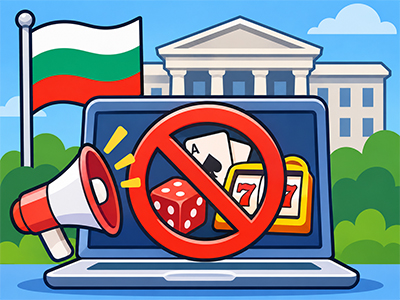
Bulgaria's government has approved a legislative package proposing a comprehensive ban on gambling advertising alongside higher taxes, increased licensing costs and tighter financial supervision of the gaming industry.
The Council of Ministers approved the amendments on November 11, clearing the way for their submission to Parliament, where lawmakers will determine whether the proposed measures become law.
The package would introduce restrictions covering television, radio, print media, websites, social media and outdoor advertising. It would also limit the use of gambling brands in sponsorship arrangements and prohibit affiliate operators from promoting gambling services through third-party marketing channels.
Alongside the advertising restrictions, the government intends to increase the financial obligations facing licensed operators from 2027. The proposals include changes to state fees, licensing charges and social responsibility contributions, while introducing additional reporting requirements for foreign gambling companies operating in the country.
Proposed Advertising Restrictions Cover All Major Media Channels
Under the proposed legislation, gambling operators would be prohibited from advertising their products, licensed businesses and associated brands across traditional and digital media.
The restrictions would apply to television and radio broadcasts, printed publications, online platforms and outdoor advertising. The government also intends to eliminate affiliate operators' ability to promote gambling products, targeting marketing arrangements through which gambling companies reach customers using independent third parties.
Sponsorship arrangements would remain possible under specific conditions. Gambling companies could display their branding through a limited number of agreements with sports clubs, federations, associations and other organizations.
Financial support for activities in the cultural, healthcare and education sectors would also remain permitted. However, the proposed rules would restrict how gambling sponsorships and associated branding appear during television broadcasts and online coverage of sponsored events.
The government argues that the existing advertising framework has failed to sufficiently reduce public exposure to gambling promotions. The proposed restrictions are intended to limit gambling-related harm, with particular attention given to children and other vulnerable groups.
The latest initiative follows an earlier attempt to introduce similar restrictions in July 2026, when Parliament rejected a proposal combining a blanket advertising prohibition with higher industry taxes.
Opponents of the earlier plan raised concerns about the financial consequences for licensed businesses and the possibility that stricter advertising rules could encourage consumers to use unregulated gambling websites.
Despite that setback, Prime Minister Rumen Radev indicated in September that the government intended to pursue tighter controls. His proposed approach included advertising restrictions, increased taxation and stronger supervision of financial transactions connected to gambling.
The November 11 approval represents another step in that legislative process, although parliamentary approval remains necessary.
Gambling Operators Face Higher Taxes and Licensing Charges
The proposed amendments would substantially change the financial framework for gambling businesses operating in Bulgaria.
From 2027, land-based casinos and gaming halls would face higher taxes. The government also plans to replace the existing charging structure in 2028 with a two-part state fee consisting of a fixed payment and a variable component calculated according to betting turnover and payouts.
Online gambling companies would be subject to a variable monthly state fee of at least EUR 100,000, equivalent to approximately $110,781.
The package would also increase licensing fees, contributions towards responsible gambling initiatives and financial penalties imposed for regulatory violations.
Companies involved in manufacturing, importing, distributing or servicing gaming equipment would face additional licensing charges. Under the proposed framework, a five-year licence would cost EUR 50,000, or approximately $55,392, while a ten-year licence would carry a fee of EUR 100,000, equivalent to around $110,781.
The government also intends to increase the fees associated with issuing and maintaining gambling licences.
Contributions dedicated to responsible gambling policies would rise as part of the package. The resulting revenue would be divided equally between the ministries responsible for sport, healthcare and education.
The proposals extend beyond licensed operators to include financial institutions involved in gambling-related transactions. Banks, payment institutions and electronic money providers handling these transactions would also be required to make financial contributions under the new framework.
Foreign companies offering online gambling services in Bulgaria would face an additional operational requirement: maintaining a permanent business presence in the country.
According to the government, this measure would improve tax reporting and give authorities a clearer picture of operators' financial activity. A local presence would allow regulators to compare declared revenues against actual betting turnover and payouts to customers.
Top Poker casinos

250%
up to
$ 2500
$ 2500
New Customer Offer. T&C’s Apply. 18+. This offer is not available for players residing in Ontario. New Customer Offer. T&C’s Apply. 19+. Play Responsibly. Welcome Pack is valid for slots, table games and specialties on the first 3 deposits of $25+ (Neosurf $10+) and up to $1000; WG x35, max cash out x20. Get 250% on the first deposit, 200% on the second, and 150% on the third one. Get extra 50% for crypto deposits.

500%
up to
$ 2500
$ 2500
+ 150 Free Spins
New Customer Offer. T&C’s Apply. 18+. Minimum deposit: $25. Maximum Cashout: 10x Deposit. PLUS 150 Free Spins. 50 Free Spins for the next 3 days on these slot games: Day 1: 50 Free Spins: Mystic Wolf; Day 2: 50 Free Spins: Golden Gorilla; Day 3: 50 Free Spins: Five Times Wins.

400%
up to
$ 3000
$ 3000
New customers only. T&C apply. 18+. Min deposit: 25 €. Max Cashout: 10xdeposit. Only valid for Video slots and 3 Reel slots.
Real-Time Monitoring and Gambling Prevention Measures Planned
The legislative package also proposes changes to the way Bulgarian authorities supervise gambling businesses.
One of the central initiatives involves establishing electronic connections between operators' gaming systems and the National Revenue Agency. These links would give the authorities access to information concerning betting activity, player payouts and gambling revenues.
The proposed system is intended to strengthen oversight by allowing regulators to obtain operational and financial information directly from gambling companies.
The government is also seeking to expand measures aimed at preventing gambling addiction through educational initiatives.
Under the proposals, informational campaigns and prevention programmes could be introduced across schools and other educational institutions. Dedicated learning materials would also be developed to provide information about gambling-related risks.
These initiatives form part of the government's broader approach to reducing gambling-related harm, alongside the planned advertising restrictions and increased financial supervision.
The proposed changes would affect several areas of the Bulgarian gambling industry, including online operators, land-based casinos, gaming halls, equipment suppliers and financial service providers.
However, the measures have yet to become law. Following the Council of Ministers' approval on November 11, the draft amendments will proceed to Parliament for consideration and a legislative vote.
Source:
“Bulgaria Bans All Gambling Advertising“, gamblingnews.com, November 12, 2026.