
Oct 13, 2026 | 5:34 am
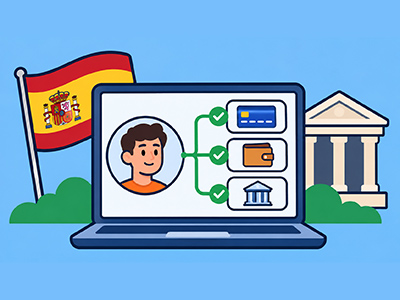
Spain has introduced mandatory payment identity checks for licensed online gambling operators, requiring every payment method used by a customer to be registered in the same person's name as their gaming account.
The new requirement took effect on Wednesday under Royal Decree 813/2026, published on 8 October by the Ministry of Economy, Trade and Business. The legislation amends 11 existing royal decrees governing the financial sector, including provisions covering identity verification under Spain's anti-money laundering framework.
The changes mean operators must establish ownership of the cards, bank accounts and payment services customers use to deposit and withdraw funds. Having an already verified gambling account will no longer satisfy the full identification requirements.
The measure applies to both new and existing customers, although the authorities have established different implementation arrangements for each group.
New Rules Set April 2027 Deadline for Existing Customers
Under the transitional provisions, operators must apply the payment ownership checks immediately to newly registered accounts. Existing customers have until 28 April 2027 to complete the additional verification process.
During the six-month adjustment period, established customers can continue depositing funds and accessing gambling services. However, operators must prevent withdrawals until they confirm that the payment method belongs to the account holder.
Customers who fail to complete the checks by the deadline face account closure. Operators must also inform Spain's Directorate General for the Regulation of Gambling (DGOJ) and return the customer's entire remaining balance, including any winnings withheld because of incomplete verification.
The legislation is intended to address cases involving identity impersonation and the use of payment methods registered to other individuals.
According to figures reported by news agency EFE, complaints relating to identity impersonation increased by 12% during 2025, reaching 8,675.
The new framework therefore extends identity verification beyond the initial registration process, requiring operators to establish a direct connection between the individual gambling online and the person financially responsible for the transactions.
Operators Face Technical and Customer Service Challenges
The implementation will require gambling companies to review their existing payment infrastructure and introduce reliable ownership verification procedures across the methods available to customers.
This includes checking payment cards, traditional bank accounts and electronic wallets. Operators will need to establish that the account holder's identity matches the details associated with each payment instrument used for deposits and withdrawals.
Existing customer databases present an additional challenge. Players who have previously funded their gambling accounts using a partner's or relative's card will have to move to a payment method registered in their own name before withdrawing funds.
The withdrawal restrictions could create operational difficulties during the transition period. Customers who encounter verification problems may be unable to access their winnings, potentially increasing complaints and placing additional pressure on customer support departments.
Operators are also seeking greater regulatory clarity about how the new provisions should work in practice.
Jdigital, Spain's online gambling industry association, has requested an interpretive guide from the authorities. According to Sector del Juego, the organization wants further explanations of the requirements to provide companies with greater legal certainty as they adapt their systems.
The absence of detailed implementation guidance could complicate preparations, particularly for operators managing large customer bases and multiple payment providers.
Top Baccarat casinos

400%
up to
$ 4000
$ 4000
New customers only. T&C apply. 18+. This offer is not available for players residing in Ontario. New customers only. T&C apply. 19+. Min Deposit: $20. Max Bet: $5. Max Cashout: 10xDeposit. Cashable Bonus. Selected games only: See the website for a list of online slots.

150%
up to
$ 1500
$ 1500
New Customer Offer. T&C’s Apply. 18+. A minimum deposit of $20 is required to be eligible for the Welcome Bonuses.

250%
up to
$ 2500
$ 2500
New Customer Offer. T&C’s Apply. 18+. This offer is not available for players residing in Ontario. New Customer Offer. T&C’s Apply. 19+. Play Responsibly. Welcome Pack is valid for slots, table games and specialties on the first 3 deposits of $25+ (Neosurf $10+) and up to $1000; WG x35, max cash out x20. Get 250% on the first deposit, 200% on the second, and 150% on the third one. Get extra 50% for crypto deposits.
Payment Checks Coincide With Wider Gambling Restrictions
The April 2027 compliance deadline comes shortly after another significant regulatory change expected to affect Spain's online gambling industry.
National deposit limits are scheduled to launch in March 2027. Under the planned system, customers will face a combined spending ceiling of €700 per day across all licensed gambling operators.
The centralized limit will apply across different companies, adding another layer of monitoring obligations for the sector. Operators will consequently face the payment verification deadline approximately one month after the expected introduction of the nationwide deposit restrictions.
The new identity requirement also broadens an approach previously included in the DGOJ's proposed risk-detection framework.
Under the draft rules for identifying customers considered at risk, flagged players would have been required to use payment methods registered in their own names. Royal Decree 813/2026 extends that principle to the entire customer base, making payment ownership verification a general obligation for licensed operators.
Source:
“Operators in Spain must now match every payment method to the player“, igamingbusiness.com, October 30, 2026.