
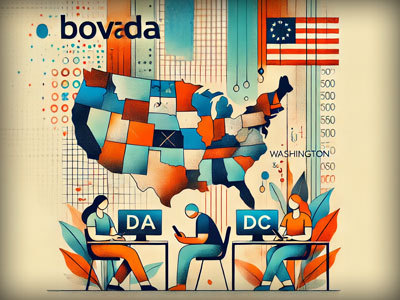
Offshore gaming operator Bovada has been banned in both Connecticut and Washington D.C., following a recent wave of regulatory actions aimed at curbing illegal gambling operations. This move adds to an expanding list of U.S. states that have restricted Bovada’s activities.
Increasing List of Restricted States
As of July 29, Bovada has listed Connecticut and Washington D.C. among its restricted states, as noted in the FAQ section of its website. This action follows a cease-and-desist order from Connecticut’s Department of Consumer Protection, issued to Bovada’s parent company, Harp Media B.V., based in Curaçao. The letter accused Harp Media of violating Connecticut General Statutes and the Connecticut Unfair Trade Practices Act (CUTPA).
While there has been no reported similar order from Washington D.C., the district now prohibits Bovada’s operations. This coincides with the recent launch of multiple legal sports betting operators in D.C., including BetMGM, Caesars, and DraftKings, ending a brief monopoly held by FanDuel.
Broader Regulatory Actions
Bovada’s restrictions are part of a broader regulatory effort. The platform is already banned in nine other states: Nevada, New Jersey, New York, Maryland, Delaware, Michigan, Colorado, West Virginia, and now Connecticut and D.C. Many of these states issued cease-and-desist orders before banning the site outright.
In May, the Michigan Gaming Control Board was the first U.S. regulator this yearto take action against Bovada, accusing it of violating multiple state laws. Colorado followed suit in June with a similar cease-and-desist order. Recently, West Virginia also pressured Bovada, resulting in the site adding West Virginia to its list of restricted states.
Concerns Over Illegal Operations
Regulators have expressed concerns about the risks associated with Bovada’s illegal operations. Licensed and regulated platforms are required to provide tools for responsible gambling, such as time and money limits, and offer support for problem gambling. Unlicensed platforms like Bovada lack these protections, increasing the risk of gambling addiction and data breaches.
Kaitlyn Krasselt, Communications Director for the Connecticut Department of Consumer Protection, emphasized the importance of regulatory standards: “Consumers are protected in the event of an issue with licensed operators. Those wagering on unlicensed platforms like Bovada risk their money and personal information.”
Top United States casinos

400%
up to
$ 4000
$ 4000
New customers only. T&C apply. 18+. This offer is not available for players residing in Ontario. New customers only. T&C apply. 19+. Min Deposit: $20. Max Bet: $5. Max Cashout: 10xDeposit. Cashable Bonus. Selected games only: See the website for a list of online slots.

100%
up to
$ 1000
$ 1000
New Customer Offer. T&C’s Apply. 18+. Min Deposit: $20. 2nd & 3rd deposits: 100% up to $1000 - bonus code BV2NDCWB.

150%
up to
$ 1500
$ 1500
New Customer Offer. T&C’s Apply. 18+. A minimum deposit of $20 is required to be eligible for the Welcome Bonuses.
Future Outlook
The trend of banning Bovada is likely to continue. The Massachusetts Gaming Commission is considering sending a cease-and-desist letter to Bovada, with a decision pending a formal assessment. Additionally, Louisiana has indicated a potential move to address illegal sports wagering within its borders.
As states continue to enhance their regulatory frameworks and crack down on illegal gambling operations, Bovada may face further restrictions across the U.S., emphasizing the importance of legal and regulated gambling environments for consumer protection.
Sources:
Bovada no-go list grows as users in Connecticut, DC restricted, sbcamericas.com, July 29, 2024.