
Oct 01, 2026 | 4:38 am
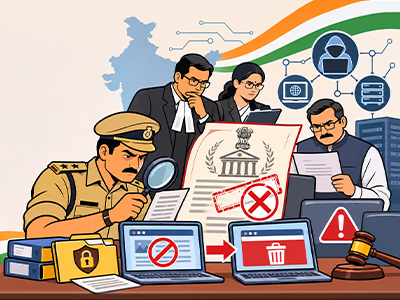
India’s efforts to curb illegal online bettingface scrutiny after two court orders used to block 129 websites were found to be forged. The Department of Telecommunications issued the directives in July and September. The findings prompted a police investigation in Uttar Pradesh.
The case coincides with a wider reassessment of online gaming law. A study by Supreme Court advocate Manan R Daga examines the shift from the traditional skill-versus-chance test towards concerns about addiction, financial harm and public safety.
Fake Orders Triggered Website Restrictions
The telecoms department published blocking directions dated July 21 and September 2, each accompanied by an emailed document presented as a high court order from Rajasthan or Allahabad in Uttar Pradesh.
Neither document appeared in the courts’ online registration records. Rajasthan High Court’s registrar told Reuters that the document bearing its name “appears to be fraudulent” and was absent from its server.
The Allahabad High Court filed a police complaint on November 6. Case documents show an investigation into suspected forgery and cheating by unknown individuals. “It is fake. It is not a genuine order from high court of Allahabad,” senior state cybercrime official Ghanshyam Yadav told Reuters. He said police had made no arrests.
The first directive led internet providers to block 34 betting websites. The second covered 95 sites. Together, the orders affected 129 websites offering gambling, which is illegal under Indian law.
Both documents carried court seals associated with genuine orders. The Rajasthan document demanded action within 24 hours and said it was issued “under my hand and the seal of this Hon’ble Court registrar”.
The order was signed in the name of Justice Garima Prashad. Police records say her office confirmed that “no such order has been passed by Her Ladyship”.
India’s Supreme Court has previously warned that fabrication “bearing forged signatures of judges strikes at the very foundation of public trust” and that “such grave criminal acts cannot be treated as ordinary or routine offences”.
Online Gaming Law Broadens Its Focus
Daga traces legal uncertainty to laws that predate app-based gambling. The Public Gambling Act of 1867 and the Information Technology Act, 2000, initially contained no specific provisions addressing online betting applications.
The Supreme Court’s decision in Dr K R Lakshmanan vs State of Tamil Nadu recognised that activities where skill predominates, including horse-racing, should not automatically qualify as gambling. Daga says the debate now includes state powers to regulate or prohibit online money games and taxation of real-money gaming, including how stakes affect liability.
Top India casinos

150%
up to
₹ 20000
₹ 20000
New Customer Offer. T&C’s Apply. 18+. Min deposit: ₹450. Max Cashout: 10xDeposit. Selected games only: See the website for a list of online slots.

100%
up to
₹ 24000
₹ 24000
New Customer Offer. T&C’s Apply. 18+.

100%
up to
₹ 20000
₹ 20000
New customers only. T&C's apply. 18+. Min deposit: 750 INR.
2025 Law Sets A National Direction
The Promotion and Regulation of Online Gaming Act, 2025, establishes a national framework, the study says. It prohibits online money games based on skill, chance or both, and provides for action involving platforms, financial transactions and advertising. The law also supports e-sports and social or educational games without monetary stakes.
Daga warns that users of unverified apps may face fraud, debt traps and misuse of personal information. The forged blocking orders raise a further concern about the reliability of official takedown procedures when authorities receive documents presented as judicial decisions.
Source:
“India ordered website takedowns on fake court orders, police launch probe”, timeslive.co.za, November 12, 2026